
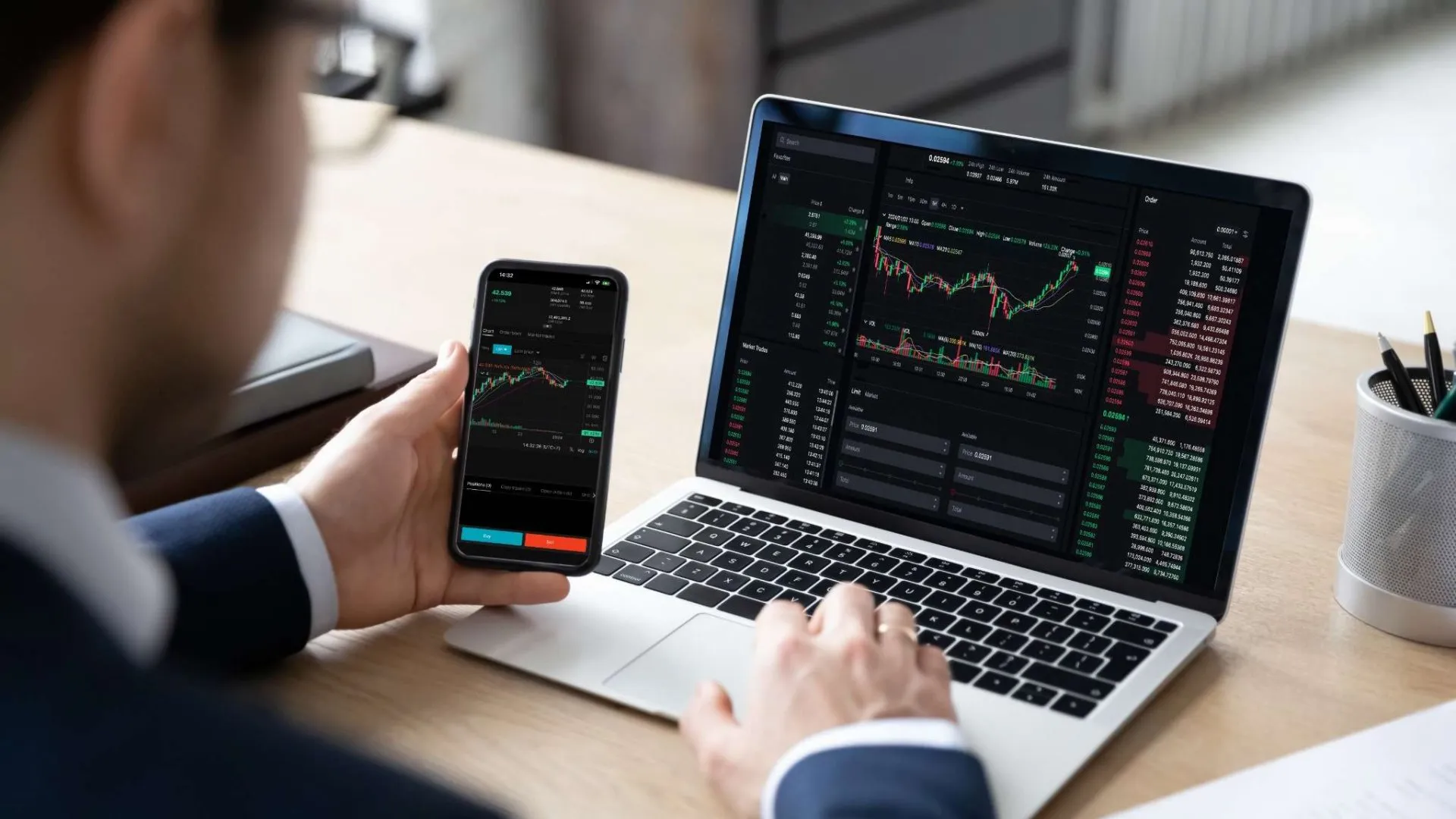
While forex trading is quite interesting, it involves a lot of risks especially when traders do not have the knowledge on how the process operates. There are some traders who enter the forex market with the aim of making profit fast without any trading strategy and end up losing their investments. However, there is the possibility that new traders could apply low risk trading strategies in order to minimize loss and maximize profit.
As a trader learning how to trade forex, adopting low risk forex trading strategies is one of the wise decisions that you could take. Low risk strategies are very helpful when you want to avoid losing too much money through wrong decision-making. Besides, these are great for traders looking to be eligible for funded forex trading accounts.
Knowing about Low-Risk Forex Trading
Low-risk forex trading involves trading techniques where the trader’s aim is to protect their investment rather than maximize profits. The trader will not try to double his/her account but make modest gains without risking significant losses.
The low-risk trader will:
- Keep position sizes small
- Use stop losses
- Avoid overtrading
- Trade only the best opportunities
- Have a trading plan
This method suits novice traders who want to minimize risks when starting out in forex trading.
Why Risk Management Is Important in Forex Trading
Most newbies think that it is essential to find a strategy. In practice, the risk management factor is sometimes more crucial than the entry signals.
The professionals know that losing trades are inevitable when trading in foreign currency markets. The critical factor is ensuring that the size of such trades is low. By allocating just 1% of your capital on each transaction, you can withstand losing streaks and remain active in the market.
It is also vital when you want to obtain a forex funded account. Most professional firms usually consider a trader's consistency and discipline in evaluating their performance.
Trade Major Currency Pairs
One of the safest strategies for newbies is trading in major currency pairs. Such pairs include:
- EUR/USD
- GBP/USD
- USD/JPY
- USD/CHF
They represent some of the safest and most reliable currency pairs in the market. The volatility of such pairs is relatively low, and they usually present traders with tight spreads.
If you are still learning how to start forex trading , you should begin with major currency pairs.
Utilize the Trend-Following Strategy
This type of strategy is one of the simplest and most secure for beginners because it is considered one of the easiest forex strategies.
The main rule is very straightforward:
- Buy in an up-trending market
- Sell in a down-trending market
It allows you to work with the market rather than against it.
Detecting Trends
One way to detect trends is through the use of moving averages:
- Price above a moving average means there is an up-trending market
- Price below a moving average means there is a down-trending market
- Most beginner traders use 50-day and 200-day moving averages.
Always Place a Stop Loss
Stop loss is an automatic feature that enables you to close your position when you reach a specific point of loss.
This is one of the best habits for low-risk trading.
For instance,
- You buy EUR/USD at 1.1000
- You put a stop loss at 1.0950
Your loss will be limited if the market turns against you
In the absence of a stop loss, a small loss can escalate into a large loss very fast.
Never place any trade without having an exit point in mind.
Risk Only 1% on Every Trade
The 1% principle is one of the best low-risk practices among seasoned traders.
It implies that you should never risk more than 1% of your entire account balance for each trade.
For instance,
- Your account balance is $1,000
- Your maximum risk per trade is $10
You will not lose much even if you make many consecutive losses.
This strategy is particularly crucial for traders trying to achieve a forex funded account because of the drawdown restrictions imposed by prop firms.
Trade High Time Frames
Many novice traders tend to trade very short-term time frames such as 1-minute and 5-minute charts.
Such time frames are very volatile and risky to trade.
However, experienced traders usually trade:
- 1-hour chart
- 4-hour chart
- Daily charts
Trading high time frames helps to identify better trends and minimize false setups.
Moreover, high time frame makes traders less emotional.
Don't Trade With Excessive Leverage
Traders can trade huge position sizes in forex trading with minimal funds with leverage.
Although leverage offers great profits, it also increases the risk of loss.
Most new traders tend to lose money with the use of too much leverage.
The use of leverage should be moderate such as:
- 1:5
- 1:10
- 1:20
Use of minimal leverage makes traders survive in the market.
Stick to One or Two Trading Strategies
The tendency among beginner traders is that they experiment with many strategies at a time.
This results in inconsistency and confusion.
In contrast, it is recommended that the trader concentrate on perfecting one or two setups.
Examples are:
- Breakout strategy
- Pull back from trends
- Support and resistance strategy
- Using the same strategy increases consistency and discipline.
- Discipline trumps strategy any day.
- Manage Your Emotions
Emotions such as fear and greed are some of the primary causes of failure among traders.
A low risk strategy helps minimize emotional trades by sticking to a trading strategy.
Emotionally sound practices include:
- No revenge trading
- No impulse trades
- Take breaks when needed
- Accept your loss with grace
Psychology is vital especially for those trading with a forex funded account.
Practice Using a Demo Account
Before using real money, traders should practice using a demo account.
Using a demo account will enable traders to:
- Familiarize themselves with the trading platform
- Test their trading techniques
- Gain confidence
- Understand market behavior
One of the most risk-free methods of learning how to start forex trading is using a demo account.
Nevertheless, traders should eventually move to a small live account since emotions are different in demo trading.
Trade in Stable Forex Market Sessions
Some forex sessions are relatively stable, making them suitable for beginners.
Generally, some of the most stable forex sessions include:
- London session
- New York session
- London-New York session crossover
High volumes characterize these sessions, resulting in tighter spreads and more predictable prices.
Traders should avoid trading in low-volume forex sessions due to unpredictable price movements.
Keep a Trading Diary
A trading diary assists in monitoring one’s progress and improving continuously.
One’s trading diary must contain:
- Entry and exit points
- Level of risk
- Reason for trading
- Mental state
- Gains or losses
Analyzing previous trades reveals areas of weakness and promotes discipline.
Professional traders approach trading as a business rather than gambling.
Be Patient With Growth
Another mistake made by beginners is having unrealistic expectations about profitability.
Learning to succeed in forex is a long process which requires patience.
The strategy of low-risk traders is aimed at:
- Consistency
- Skill development
- Risk management
- Account growth
Small amounts can grow into large sums through regular trading.
For example, traders working towards a forex funded account require patience more than others.
Conclusion
Low-risk forex trading strategies lay the foundation for successful activity in the foreign exchange market. Traders who are interested in saving their money, controlling their emotions and being consistent have more chances of surviving and developing in the trading business.
If you learn how to make your first steps in forex trading, remember that success will not be achieved by gambling but by consistency, patience and proper risk management.
Trend trading, using stop-loss, risking only one percent on each deal and working only with major currency pairs can help avoid mistakes made by inexperienced traders.
At the same time, it is necessary to follow these strategies in order to earn and maintain a forex funded account.